28 Sep 2026
Patterns Linking Promotional Credits to Tiered Access in Cross-Format App Experiences

Digital platforms across retail, streaming, and productivity sectors have developed structured systems where promotional credits connect directly to tiered access features that operate consistently on mobile, tablet, and desktop formats. Data from industry tracking services indicate that these linkages appear most frequently in applications supporting synchronized user accounts, where credits earned in one format adjust eligibility for benefits in others without requiring separate verification steps.
Core Mechanisms Observed in Recent Deployments
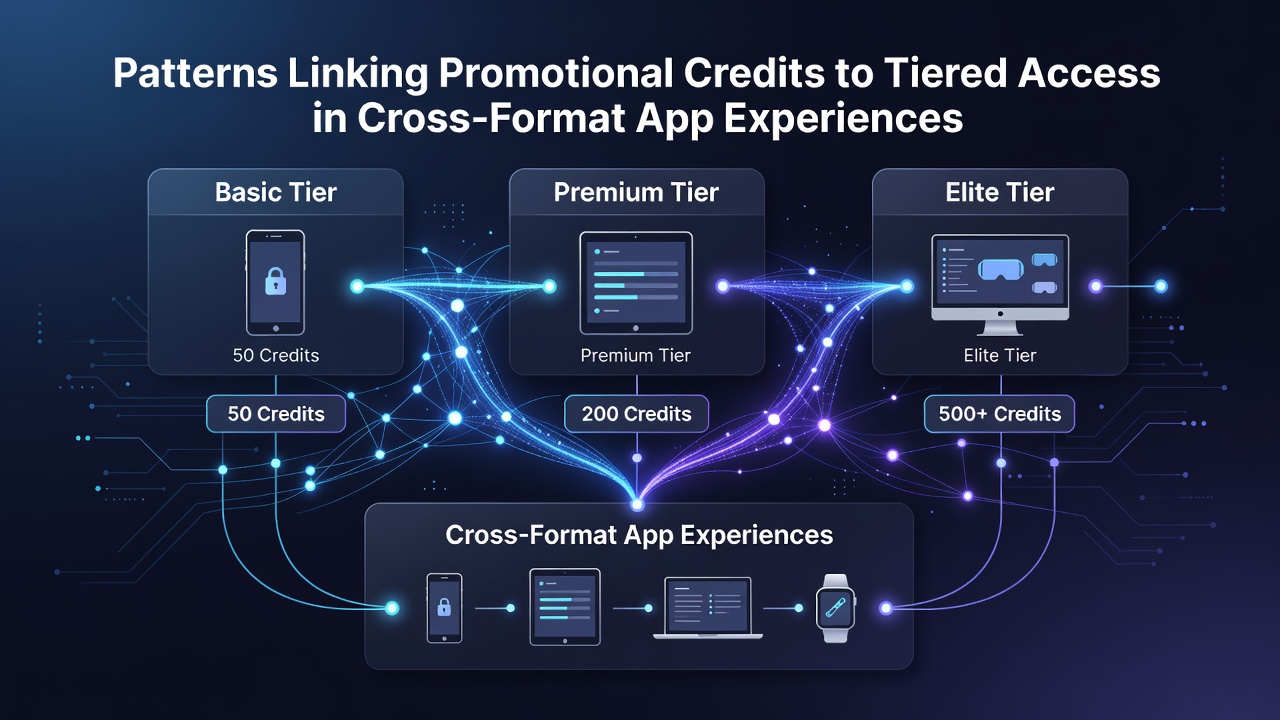
Application developers implement promotional credits as temporary or conditional units that users accumulate through defined actions such as account verification, content engagement, or referral completions. These credits then map onto access tiers that control features like storage limits, customization options, and priority support channels. Records compiled through September 2026 show that synchronization occurs via shared backend databases, allowing a credit applied on a smartphone interface to update tier status visible on a web dashboard within seconds.
One pattern involves threshold-based progression. Users reach successive tiers once accumulated credits surpass fixed numerical markers, with each tier unlocking incremental permissions that remain available across all supported formats. Studies from research institutions note that this model appears in productivity applications where initial credits grant basic collaboration tools and higher tiers expand to advanced analytics and integration capabilities.
Cross-Format Synchronization Practices
Platforms maintain consistency by routing all credit transactions through centralized ledgers that update in real time. When a user redeems credits on a tablet application, the system reflects the change on linked desktop sessions without additional user input. Figures from the European Commission's digital single market monitoring reports reveal that such synchronization reduces access discrepancies by measurable percentages in multi-device environments.
Another recurring structure ties credit expiration rules to tier maintenance. Credits carry validity periods that align with tier review cycles, prompting users to engage across formats to sustain higher access levels. Observers note that this approach appears in subscription-oriented services where desktop activity contributes equally to mobile contributions when determining ongoing eligibility.
Regional Data and Implementation Examples
Reports issued by the Australian Competition and Consumer Commission document similar credit-to-tier linkages in consumer-facing applications operating in the Asia-Pacific region during 2025 and 2026. The patterns show higher adoption rates among applications that support both native mobile clients and progressive web versions. In Canada, research from the Competition Bureau has tracked comparable systems in retail loyalty applications, where promotional credits earned through in-store scans transfer directly to tier benefits accessible via web portals.
Implementation varies by sector. Streaming services often convert viewing credits into ad-free tiers that function identically on smart televisions, mobile apps, and browser players. Productivity suites apply credits toward expanded cloud storage tiers that sync permissions across operating systems. Each case relies on unified authentication protocols that prevent format-specific fragmentation.
Technical Patterns Supporting the Linkages
Developers employ API endpoints that handle credit validation and tier assignment as single transactions. This design allows simultaneous updates across formats while maintaining audit trails for compliance purposes. Data compiled through September 2026 indicates that applications using these endpoints experience fewer support queries related to access inconsistencies compared with systems that process credits separately per format.
Security layers incorporate device fingerprinting alongside account credentials to confirm that credit redemptions originate from verified sessions. Such measures help preserve the integrity of tier assignments when users switch between mobile and desktop environments frequently.
Conclusion
Patterns connecting promotional credits to tiered access continue to evolve within cross-format applications as developers refine synchronization methods and threshold structures. Available records from multiple regulatory and research bodies demonstrate consistent application of these linkages across retail, streaming, and productivity sectors through September 2026, with backend systems enabling uniform experiences regardless of device format.